When Versioning Multiplies: How Microservice Boundaries Turn Isolated Decisions Into Systemic Sprawl
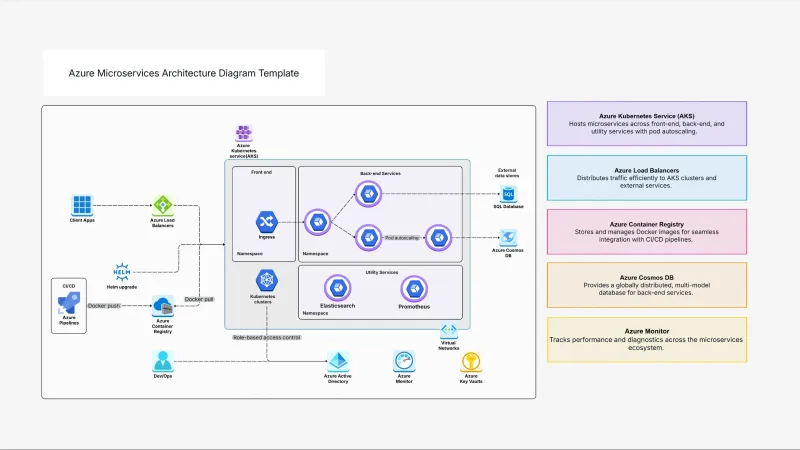
Photo: microservices architecture network diagram complexity, via cdn.cloudairy.com
There is a particular moment that many senior engineers recognize, even if they struggle to name it. The pull request looks routine — a new version endpoint, a deprecated field, a contract adjustment in a payment service or an inventory API. The change is approved, merged, and deployed. Nobody flags it as a risk. And yet, weeks or months later, the same team is staring at a dependency graph that has quietly doubled in complexity, with business logic that once lived in one place now scattered across five services in three different versions.
This is not a failure of intent. It is a structural consequence of how microservice versioning compounds when applied without a governing framework. Understanding the mechanics of that compounding is the first step toward controlling it.
The Cascade Nobody Planned For
Microservice architectures are deliberately decoupled. That decoupling is their primary value proposition: teams can deploy independently, scale selectively, and iterate without coordinating every release across the organization. Versioning, in theory, reinforces that independence. A service publishes a versioned contract, consumers pin to a stable version, and both sides evolve on their own schedule.
In practice, the boundaries are far more porous. When Service A introduces v2 of an endpoint to accommodate a new business rule — say, a revised tax calculation or an updated eligibility check — Service B, which consumes that endpoint, faces a choice. It can adopt v2 immediately, which requires its own deployment and potentially its own contract change for Service C downstream. Or it can maintain compatibility with v1 while preparing for migration, which means running parallel logic internally.
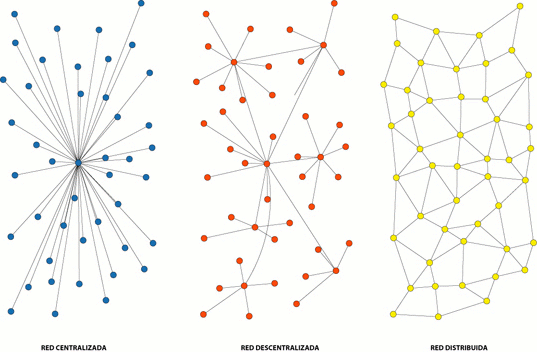
Neither path is clean. The first creates a coordination dependency that microservices were designed to eliminate. The second creates a fork in the consuming service's own codebase. Multiply that dynamic across a platform with thirty or forty services, and the version graph stops looking like a dependency tree and starts resembling a distributed monolith — one with all the coupling of its predecessor and none of the visibility.
Where the Logic Goes
The most insidious effect of unchecked version cascades is not the proliferation of endpoints. It is the duplication of business logic. When a service must support two versions of an upstream contract simultaneously, the logic required to interpret, transform, or validate data from each version typically lives inside the service itself. Over time, that logic drifts. Teams patch one version path but forget the other. Edge cases handled in v1 are not carried forward to v2. A bug fixed in the new implementation persists in the legacy branch.
This is version debt in its most concrete form: not unused code, but actively maintained parallel implementations of the same business intention, separated by a version boundary that was never meant to carry that weight.
Engineering teams in high-growth environments — the kind scaling from a dozen services to fifty over eighteen months — are particularly vulnerable. The pace of feature development creates pressure to ship versioned interfaces quickly. The organizational structure, often organized around product verticals rather than platform concerns, means no single team has visibility into how versioning decisions in one domain affect services in another. The result is a system where the version history of a payment service quietly determines the architectural shape of a fulfillment service three layers away.
Recognizing the Threshold
Not all versioning is sprawl. Maintaining multiple API versions for external consumers is a legitimate and often necessary practice. The distinction worth drawing is between versioning that serves contract stability and versioning that has become a mechanism for deferring integration work.
Several signals indicate a team has crossed that threshold:
Version endpoints outnumber feature endpoints. When a significant portion of a service's surface area exists to maintain backward compatibility with internal consumers, the versioning strategy has become load-bearing infrastructure rather than a release tool.
Business logic appears in transformation layers. If services are running adapter code to translate between upstream API versions — particularly for fields or rules that have semantic meaning, not just structural differences — that logic belongs in a shared contract, not in a consumer's internals.
Deprecation notices accumulate without retirement dates. A v1 endpoint marked deprecated eighteen months ago and still receiving traffic is not a versioning success. It is evidence that the migration cost has been externalized and never paid.
New engineers cannot trace a feature's authoritative implementation. When onboarding engineers ask where a specific business rule lives and the answer involves three services and two version qualifiers, the architecture has lost coherence.
A Framework for Containment
Addressing version sprawl does not require a rewrite. It requires a policy shift, applied consistently at the points where versioning decisions are made.
The first principle is to treat internal service versioning with the same scrutiny applied to external API versioning. Many teams apply rigorous deprecation cycles and consumer notification processes to public APIs while allowing internal service contracts to evolve informally. That asymmetry is where sprawl originates.
The second principle is to establish explicit migration windows rather than open-ended compatibility guarantees. When a new version is published, the consuming team should have a defined period — thirty days, sixty days, one quarter — to migrate. After that window, support for the previous version is withdrawn. This forces the integration cost to be paid promptly rather than deferred indefinitely.
The third principle is to centralize shared business logic at the contract layer rather than duplicating it across consumers. If multiple services need to apply the same validation or transformation, that logic belongs in a shared library, a schema registry, or a dedicated contract service — not replicated in each consumer's version-handling code.
Finally, teams benefit from maintaining a version topology map: a living document or automated visualization that shows which services are pinned to which versions of their dependencies, and flags any service running against a deprecated contract. Without visibility, version debt is invisible. With it, the debt becomes a backlog item with an owner.
The Compounding Cost of Inaction
Version sprawl does not announce itself. It grows in the space between sprint cycles and quarterly planning, accumulating in codebases that pass code review and deploy without incident. The cost appears later, when a platform-wide business rule change requires touching seven services instead of one, or when a compliance requirement demands auditing logic that has quietly forked across four version branches.
The engineering teams that manage this well are not the ones that version less. They are the ones that version deliberately — with clear policies, defined windows, and a shared understanding that every version boundary is a commitment with a maintenance cost attached. Shipping smarter, in this context, means recognizing that the version you publish today is infrastructure your team will maintain tomorrow.