Dead Weight in the Pipeline: The True Cost of an Unmanaged Artifact Repository

Photo by Photo by Tyler on Unsplash on Unsplash
Every engineering team eventually confronts the same uncomfortable reality: the infrastructure that once felt lean and purposeful has quietly become a landfill. Somewhere between the sprint that shipped the product and the quarter that scaled the team, the artifact repository filled up. Container images from deprecated services linger. Build cache layers from abandoned experiments persist. Versioned binaries from releases nobody remembers accumulate like sediment at the bottom of a river.
The storage bill grows. Deployment times stretch. Nobody is quite sure what is safe to delete.
This is the artifact graveyard problem, and it is far more common—and far more expensive—than most engineering leaders acknowledge.
How Artifact Sprawl Happens
Artifact accumulation is not the result of negligence so much as it is the natural byproduct of velocity. When teams move fast, they generate artifacts constantly: compiled binaries, Docker images, npm packages, Maven JARs, Terraform state snapshots, and more. CI/CD pipelines are designed to produce these outputs automatically, and they do so reliably—whether or not anyone has considered what happens to the outputs afterward.
Retention policies, when they exist at all, are often set once during initial infrastructure configuration and never revisited. A policy that made sense for a five-person team publishing a handful of builds per week becomes dangerously permissive for a fifty-person team running hundreds of pipeline executions daily.
The result is predictable. Registries balloon. Cache layers proliferate. Storage costs climb in ways that feel incremental month over month but compound into significant budget line items over time.
Worse, the performance implications are frequently overlooked. A bloated artifact registry does not just cost money—it slows pull times, degrades cache hit rates, and introduces latency into the very pipelines designed to accelerate delivery.
The Hidden Costs Beyond Storage
When engineering leaders discuss artifact management, the conversation typically begins and ends with storage pricing. That framing misses the larger picture.
Consider egress costs. Cloud providers in the US—AWS, Google Cloud, Azure—charge for data transfer out of storage services. An artifact registry stuffed with multi-gigabyte container images that are pulled repeatedly across environments generates egress fees that can dwarf the underlying storage cost. Teams running large-scale Kubernetes deployments are particularly exposed to this dynamic, as image pulls happen at scale across node pools.
Consider also the cost of developer time. When a cache is so large and poorly organized that it no longer provides meaningful hit rates—or when engineers must manually hunt through registries to identify current versus stale artifacts—the friction is real and measurable. Time spent navigating artifact chaos is time not spent building.
Finally, there is the risk dimension. Orphaned artifacts are not merely wasteful; they can be dangerous. Container images built on outdated base layers carry unpatched vulnerabilities. Old dependency archives may reference packages that have since been compromised. An artifact that nobody is actively maintaining is an artifact that nobody is actively securing.
Auditing What You Actually Have
The first step toward reclaiming control is understanding the scope of the problem. A thorough artifact audit should answer several questions:
- What artifacts exist, and when were they last accessed? Most registry platforms—JFrog Artifactory, AWS ECR, GitHub Packages, Google Artifact Registry—expose access logs or last-used metadata. Pull this data and sort by recency. The results are often illuminating.
- Which artifacts are referenced by active pipelines or deployed environments? Cross-reference your registry contents against your CI/CD configuration and infrastructure manifests. Anything not referenced by a live system is a candidate for pruning.
- What is the size distribution? Identify your largest artifacts. A small number of oversized images or cache layers frequently accounts for a disproportionate share of storage consumption.
- Are your cache layers actually being used? Build cache hit rate metrics, where available, reveal whether your caching strategy is functioning as intended or simply accumulating noise.
This audit need not be a manual exercise. Tooling exists to automate much of this analysis, and even a basic scripted inventory—pulling registry metadata via API and joining it against pipeline logs—can surface actionable insights within hours.
Designing a Lifecycle Policy That Holds
Auditing is a one-time correction. Lifecycle policy is the mechanism that prevents the graveyard from refilling.
Effective artifact lifecycle management rests on a few core principles.
Tie retention to semantic meaning, not just age. A policy that deletes anything older than thirty days will eventually destroy artifacts that matter. A policy that retains the last N tagged releases per service, plus any artifact referenced by a current deployment, is far more durable. Age can serve as a secondary filter, but semantic relevance should be primary.
Automate enforcement at the registry level. Most enterprise-grade registries support native lifecycle rules. AWS ECR lifecycle policies, for instance, allow teams to define rules based on image count, tag status, and age. Configure these rules explicitly rather than relying on manual cleanup cycles that will inevitably slip.
Treat build cache as ephemeral by default. Cache layers should be understood as performance optimizations, not permanent storage. Design your caching strategy around reproducibility: if a cache is lost, the build should still succeed, just more slowly. This mindset discourages over-reliance on cache state and makes aggressive pruning feel safe rather than risky.
Version your artifact policies alongside your code. Store lifecycle configuration in version control. Review it during infrastructure audits. Treat it with the same rigor applied to application configuration. A policy that lives only in a cloud console UI is a policy that will be forgotten.
Reclaiming Performance Through Pruning
The performance benefits of a well-maintained artifact repository are often underestimated. Teams that have undertaken aggressive pruning exercises consistently report measurable improvements in pipeline execution times—not because the pipelines themselves changed, but because the supporting infrastructure became faster.
Smaller registries mean faster image pulls. Leaner caches mean higher hit rates and less time spent fetching irrelevant layers. Reduced storage churn means fewer I/O bottlenecks during peak build periods.
For organizations running on managed Kubernetes in environments like GKE, EKS, or AKS, the impact of image pull latency on pod startup times is particularly significant. Trimming image sizes and eliminating redundant layers from the registry translates directly into faster autoscaling responses and more predictable deployment behavior.
Making Artifact Hygiene a Team Habit
Technical solutions alone are insufficient. The most precisely configured lifecycle policy will erode over time if the team culture does not support ongoing stewardship.
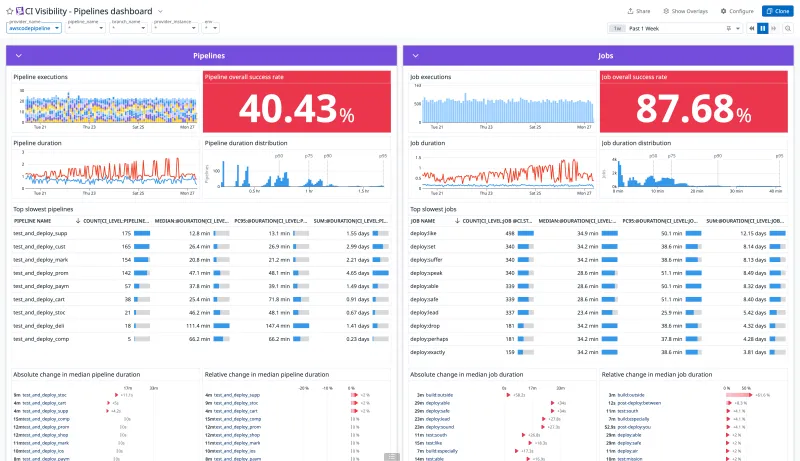
Engineering organizations that manage artifact sprawl effectively tend to share a few practices. They assign explicit ownership of artifact repositories to specific teams or individuals. They include artifact hygiene in quarterly infrastructure reviews. They surface storage and egress cost metrics in engineering dashboards alongside performance and reliability indicators, making waste visible rather than abstract.
They also resist the temptation to treat storage as cheap. Cloud storage is inexpensive at small scale, but that perception becomes a liability as systems grow. The teams that avoid the graveyard problem are those that never allowed waste to feel free.
Conclusion
The artifact repository is not a passive component of the software delivery stack. It is an active participant in pipeline performance, security posture, and operational cost. Left unmanaged, it becomes a liability. Managed deliberately, it becomes a competitive advantage—a lean, fast, auditable record of what your systems produce and how they evolve.
Shipping smarter means knowing not just what you are building, but what you are keeping, and why. The teams that answer those questions with precision are the ones whose pipelines stay fast, whose bills stay predictable, and whose infrastructure scales without accumulating the dead weight of the past.