Production Is Not a Branch: The Slow Unraveling of Configuration Truth
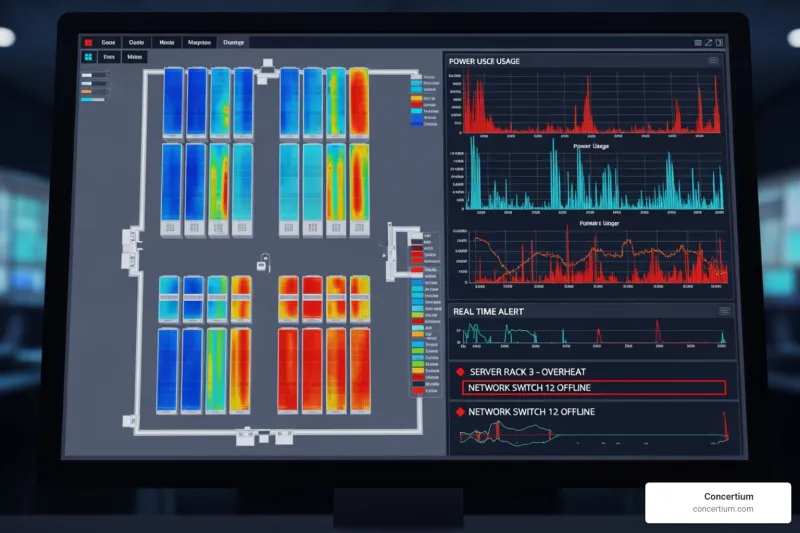
Photo: server infrastructure configuration management data center monitoring, via images.bannerbear.com
There is a version of your production environment that exists in your repository. There is another version that actually runs. For many engineering teams, these two things have not been the same for months — perhaps longer. The distance between them is not measured in commits or pull requests. It is measured in incident post-mortems, in hours spent reproducing bugs that appear only in live systems, and in the quiet dread that accompanies any significant deployment.
This divergence has a name: configuration drift. And while the term is familiar to most practitioners, the full weight of its consequences rarely receives the attention it deserves until something breaks in a way that cannot be easily explained.
How Drift Begins: The Reasonable Exception
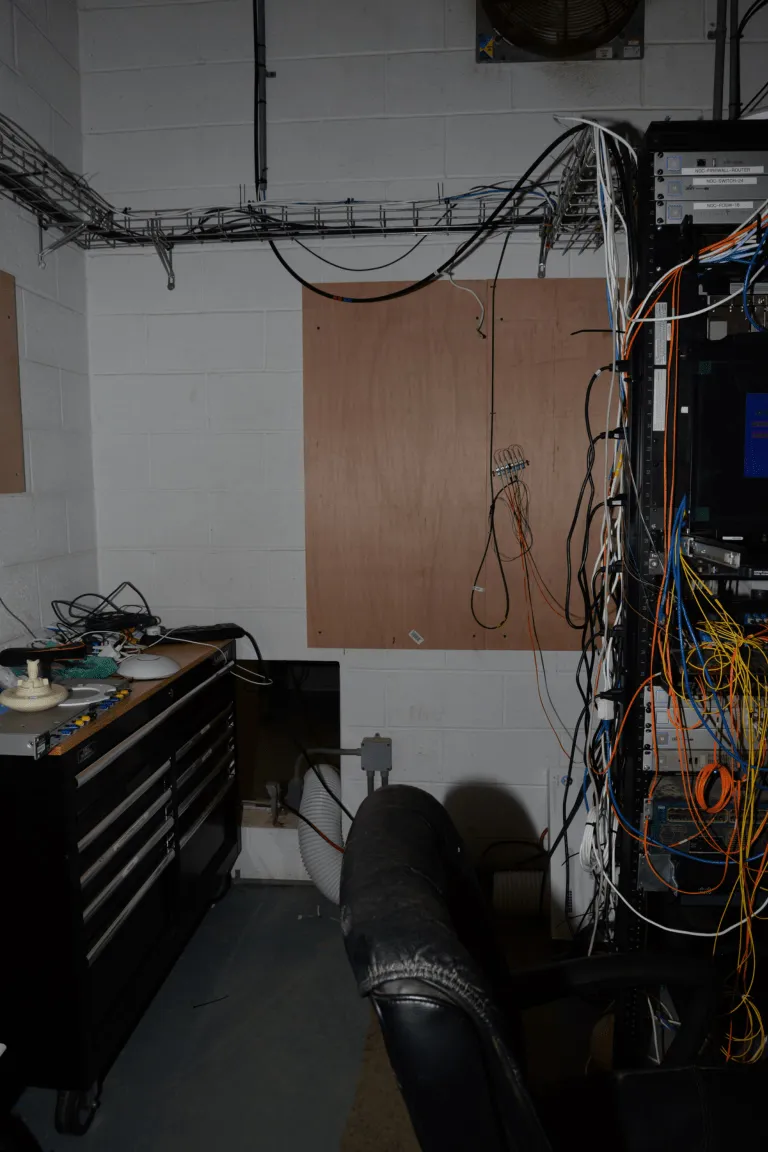
Configuration drift seldom originates from negligence. It begins with a reasonable decision made under pressure. A database connection pool limit is adjusted directly on a production server to resolve a latency spike during peak traffic. A firewall rule is added manually to unblock a time-sensitive integration. An environment variable is set by hand because the deployment pipeline was moving too slowly and a customer was waiting.
In each case, the engineer involved understood the change they were making. The problem is that the change was never committed anywhere. It lives only in the running system — and in the memory of the person who made it, if they are still on the team.
Over time, these exceptions accumulate. What began as a single undocumented adjustment becomes a layered set of runtime modifications that the repository has no record of. The production environment begins to carry a kind of institutional memory that is entirely inaccessible to version control, to new team members, and to any automated process that relies on the repository as a source of truth.
The Reproducibility Problem
The most immediate consequence of configuration drift is the loss of reproducibility. When a staging environment is provisioned from source code and production has been modified outside of that source code, the two environments are no longer equivalent. This is a foundational problem for any team that relies on staging to validate changes before they reach users.
Bug reports that cannot be reproduced in staging become a familiar frustration. The assumption that staging mirrors production — an assumption baked into most testing and release strategies — quietly stops being true. Engineers begin adding caveats: "It works in staging, but production might behave differently." That hedge, once it enters team vocabulary, is a signal that drift has already compromised the value of the pre-production environment.
Disaster recovery scenarios expose the problem most starkly. When a production system must be rebuilt from scratch — whether due to infrastructure failure, a security incident, or a migration — the repository should be the definitive specification for what gets built. If drift has been accumulating for months, that specification is incomplete. The rebuilt environment will not match what was running before, and the differences may not surface until something fails in a way that is difficult to trace.
Why Version Control Alone Is Not Sufficient
It is tempting to frame configuration drift as a version control discipline problem — if engineers simply committed every change, drift would not occur. This framing is accurate but incomplete. The conditions that produce drift are structural, not merely behavioral.
Most version control workflows are optimized for code, not for runtime configuration. Environment variables, infrastructure state, cloud resource configurations, and operating system parameters exist in systems that are architecturally separate from the application repository. Bridging that gap requires deliberate tooling choices and process design, not just good intentions.
Furthermore, the urgency that drives undocumented changes is real. When a production system is degrading and a manual adjustment can restore stability in minutes, the correct immediate action is often to make that adjustment first and document it later. The failure is not in making the change — it is in the absence of a reliable mechanism that ensures "document it later" actually happens.
Detecting Drift Before It Becomes a Crisis
Detecting configuration drift requires treating the running state of a system as data to be compared against a known baseline. Several approaches make this practical at scale.
Infrastructure as Code with drift detection tooling is the most direct solution for teams managing cloud infrastructure. Tools that continuously compare the declared state in code against the actual state of provisioned resources can surface unauthorized or undocumented changes in near real-time. When the two states diverge, the discrepancy is flagged rather than silently accepted.
Immutable infrastructure patterns address drift at the architectural level. When servers and containers are never modified in place — when every change requires building and deploying a new artifact — runtime modification becomes structurally difficult. There is no running system to patch directly; the only path forward is through the pipeline.
Automated configuration auditing applies even in environments where immutability is not fully achievable. Scheduled jobs that read the actual configuration state of production systems and compare it against repository-defined expectations can catch drift that would otherwise go unnoticed for weeks.
Change event logging with mandatory attribution ensures that when runtime modifications do occur, they are recorded with enough context to be traced. This does not eliminate drift, but it reduces the likelihood that a change disappears entirely from institutional memory.
The Organizational Dimension
Technical tooling alone will not solve configuration drift if the organizational conditions that produce it remain unchanged. Teams that operate under chronic deployment friction — slow pipelines, fragile staging environments, lengthy approval chains — will continue to make direct production changes because the alternative is too costly in the moment.
Addressing drift therefore requires examining the deployment process itself. If engineers regularly bypass the pipeline because it is too slow, the pipeline is the problem. If undocumented changes are made because the documented path is unclear or inaccessible under pressure, the process needs to be redesigned to accommodate urgency without sacrificing traceability.
Post-incident reviews should include an explicit question: was any change made to production during this incident that has not yet been committed to the repository? Making that question routine normalizes the expectation that drift will be remediated, not merely tolerated.
Closing the Gap
Configuration drift is fundamentally a versioning problem. The source code repository is supposed to be the single authoritative description of what runs in production. When that authority erodes — when production becomes a system that has outgrown its own documentation — the entire value proposition of version control is undermined.
Rebuilding that authority is not a one-time project. It is an ongoing discipline that requires tooling to detect divergence, process design to reduce the conditions that produce it, and a cultural commitment to treating the repository as something worth keeping accurate.
Production is not a branch. But it should behave as though it were — fully traceable, fully reproducible, and never more than one commit away from being explained.