Shipping Fast, Deploying Slow: The Versioning Trap at the Heart of Modern DevOps

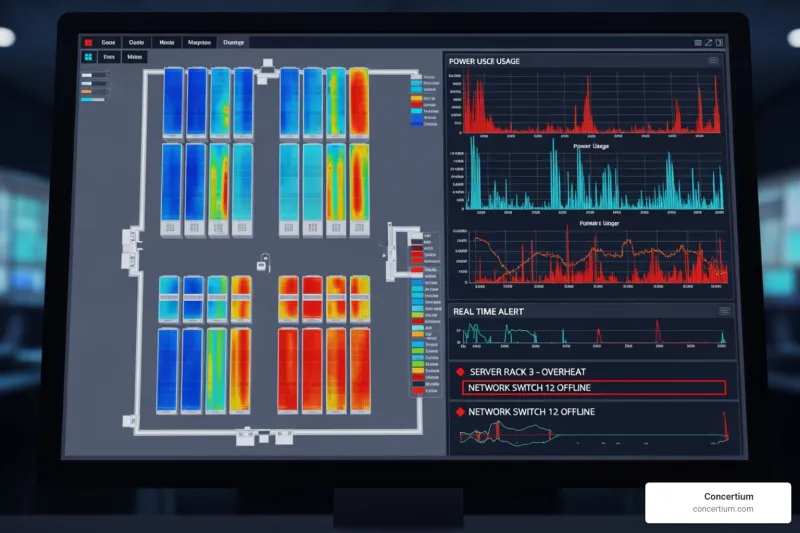
Photo: software engineer frustrated at deployment dashboard with multiple monitors showing metrics, via www.bloom-group.nl
There is a particular kind of cognitive dissonance that settles over engineering leadership when the dashboard tells two contradictory stories at once. Commit frequency is up. Pull request cycle time is down. Developers are shipping features at a pace the team has never achieved before. And yet, somehow, the time between a feature being marked "complete" and that feature reaching production keeps growing. Sprints end. Releases slip. Deployment windows expand.
This is not a morale problem. It is not a process problem in the conventional sense. It is a versioning debt problem — and it is one of the most underdiagnosed sources of friction in modern software delivery.
The Metric Blind Spot
Deployment frequency, lead time for changes, mean time to restore, and change failure rate — the four key metrics popularized by the DORA research program — have become the lingua franca of DevOps health assessments across the US engineering community. They are genuinely useful. But they measure outcomes, not causes. And when versioning debt accumulates quietly in the background, those metrics can mask an entire category of friction that never surfaces in a retrospective.
Consider what happens in a team that has grown from five engineers to fifty over three years. Early on, everyone knew which artifact corresponded to which release. Environment parity was maintained informally because the environments were simple. Dependency versions were pinned by convention and tribal knowledge.
As the team scaled, those informal practices did not scale with them. Artifact naming conventions diverged across services. Staging environments began drifting from production in ways that were documented nowhere. Dependency version decisions accumulated in individual repositories without any cross-team visibility. None of this registered on the DORA dashboard. But every deployment now requires someone — usually a senior engineer — to manually reconcile what should be deployed, to which environment, in what order, against which configuration baseline.
That reconciliation time does not appear in your lead time metric. It appears in the calendar, as a deployment that was scheduled for Tuesday and actually completed on Thursday.
What Version Debt Actually Looks Like in Practice
Version debt is not a single artifact or a single decision. It is a sedimentary accumulation of small, individually reasonable choices that compound into systemic friction over time.
It looks like a service that has three active release branches because no one ever formally deprecated the previous two, and downstream consumers have not been fully migrated. It looks like a CI/CD pipeline that builds successfully but cannot reliably tell you which version of a shared library is actually bundled in the resulting artifact. It looks like an environment configuration that lives in a wiki page last updated fourteen months ago, maintained by someone who left the company in Q2.
Each of these represents a decision point — a moment where a deployment engineer must stop, investigate, and manually verify something that should be automatically knowable. Individually, each pause costs minutes. Collectively, across a deployment involving a dozen services and three environments, they cost hours. Sometimes days.
The cruel irony is that the faster a team ships code, the faster this debt accumulates. High commit velocity without disciplined version governance is not acceleration — it is acceleration toward a wall.
Why Standard Tooling Fails to Surface the Problem
Most version control and CI/CD tooling is optimized for the individual repository. It answers the question: what changed, and when? What it does not answer, at least not natively, is: what is the current deployed state of this system, and does it match what we intended to deploy?
This gap — between what version control knows and what production actually contains — is precisely where version debt lives. An artifact registry that has grown without governance cannot reliably answer provenance questions. A release tracking system that was bolted onto an existing ticketing tool cannot accurately represent the relationship between a commit, the artifact it produced, the environment it was deployed to, and the configuration state that environment held at the time of deployment.
Engineering teams frequently invest in observability tooling to understand what their systems are doing at runtime. Far fewer invest equivalent effort in understanding the version state of their systems at deploy time. The former reveals incidents after they occur. The latter prevents the class of incidents that stem from deploying the wrong thing to the wrong place with the wrong configuration — which, anecdotally, accounts for a significant proportion of change-related failures in distributed systems.
A Framework for Diagnosing the Real Bottleneck
If your team is experiencing the shipping-fast, deploying-slow paradox, the investigation should begin not with your code but with your version surface area — the total set of things in your system that have a version, should have a version, or are implicitly versioned by their deployment order.
Start by auditing three categories:
Artifact traceability. For any artifact currently running in production, can you deterministically identify the source commit, the build parameters, and the dependency versions that produced it? If the answer requires human investigation rather than tooling, you have an artifact provenance gap.
Environment parity documentation. Is the configuration state of each environment — including infrastructure, runtime dependencies, and feature flag states — captured in version-controlled form and automatically validated before each deployment? If environment parity is maintained by convention rather than enforcement, drift is inevitable.
Release boundary clarity. Does every team in your organization share a common, unambiguous definition of what constitutes a release? Are version identifiers assigned consistently, and do they carry semantic meaning that downstream consumers can rely on? Inconsistency here creates the manual reconciliation overhead that silently expands deployment windows.
Once these gaps are mapped, prioritize remediation by blast radius: which gaps affect the most services, the most frequently deployed paths, and the most critical production environments.
The Compounding Cost of Deferral
Version debt behaves like financial debt in one critical respect: the longer it goes unaddressed, the more expensive it becomes to service. A team of ten can absorb the friction of informal version management because the cognitive overhead is distributed across a small group with high shared context. A team of a hundred cannot. The same informal practices that were merely inconvenient at small scale become genuinely obstructive at large scale — and the remediation effort grows proportionally with the size of the codebase, the number of services, and the length of time the debt has been accumulating.
The teams that successfully escape the shipping-fast, deploying-slow trap are not necessarily the ones with the most sophisticated tooling. They are the ones that treat version governance as a first-class engineering discipline — not a compliance exercise, not an afterthought, but a foundational investment in the reliability of their delivery pipeline.
Closing Perspective
Deployment velocity is not simply a function of how fast engineers write code. It is a function of how clearly a team can answer, at any given moment, exactly what it is deploying. When that answer requires investigation, the deployment slows. When it requires escalation, the deployment slips. When it requires rollback because the answer turned out to be wrong, the deployment fails.
Shipping smarter has always meant more than committing frequently. It means maintaining the kind of version clarity that allows fast code to become fast deployments — without the invisible toll of accumulated debt extracting its payment at the worst possible moment.